

The Construction Labor Crisis Is Not a Hiring Problem—It’s a Workforce Strategy Problem
Bridge Builders Network exists to help contractors solve one of their greatest operational challenges: finding, developing, and retaining a skilled workforce. Through workforce development, staffing solutions, and industry partnerships, Bridge Builders connects contractors with professionals who are prepared to contribute from day one.
For more than twenty years, I have worked in the construction industry as a contractor, project manager, and business owner. During that time, one conversation has remained constant:
“We need more people.” Contractors have been saying it for years:
We need more workers.
We need more skilled people.
Nobody wants to work anymore.
For a long time, the conversation felt like a challenge we could manage. There were always people available. They may not have had the exact experience or skill set required, but there were people willing to enter the industry and learn.
Today, the challenge has changed, the construction labor shortage is no longer just an inconvenience. It has absolutely become a business risk.

Man looking at construction cityscape.
The Cost of Not Having the Right People
One of the biggest indicators that the workforce shortage has reached a different level is the number of opportunities contractors are forced to decline—not because they lack the experience, bonding capacity, equipment, or relationships to complete the work, but because they do not have the people necessary to execute.
I have personally made the decision not to pursue projects because I did not have confidence that I could properly staff them, and many contractors are facing the same reality. The opportunity exists. The market exists. The demand exists. But the workforce capacity does not.
That creates a difficult choice for contractors:
Do you pursue the work and accept the risk of being understaffed?
Or do you walk away from revenue because you cannot confidently deliver?
Neither option is ideal. The result is lost opportunities, reduced growth, and increased pressure on the people already inside the organization.
The Industry Is Competing for the Same People
Another challenge facing contractors today is that the industry is often competing for the same experienced individuals. The skilled superintendents, foremen, operators, and project leaders who have proven themselves are in high demand. They are frequently approached by multiple companies because everyone is searching for the same limited pool of talent. The result is a cycle where contractors are constantly trying to recruit from one another instead of developing the next generation of skilled professionals. This creates higher labor costs, increased turnover, and instability. The solution cannot simply be finding the same people faster. The solution has to be developing more qualified people.
The Problem Isn’t That People Don’t Want to Work
One of the most frustrating statements I hear in the industry is:
“Nobody wants to work anymore.”
I understand the frustration behind that statement. Construction is demanding…it requires discipline, reliability, and a willingness to learn. But after spending more time focused on workforce development, I believe the reality is more complicated.
There are people who want opportunity. There are people who want meaningful work. There are people who want to build careers. The challenge is that many of them have not yet developed the skills, experience, or professional readiness that contractors need.
That is the gap.
Contractors are looking for production-ready employees. Many individuals entering the workforce need training, mentorship, and a pathway to become those employees. The opportunity exists on both sides. The question is whether we are willing to build the bridge between them.
Understaffing Creates a Ripple Effect Across the Entire Company
Construction is unpredictable, and every contractor knows that. Weather changes. Materials are delayed. Design issues arise. Owners make adjustments. Other subcontractors create challenges.
There are countless variables outside of a contractor’s control, but the people on your project are what help you manage those variables. When you have qualified leadership, experienced supervision, and a capable workforce, you can solve problems before they become crises. But when you are understaffed, everything has to go perfectly.
And construction rarely goes perfectly.
I have experienced this firsthand. There have been projects where I personally had to step back into operations, go to the jobsite, and help stabilize performance because we did not have the right people in the right positions. We were able to deliver and to satisfy our customers, but the cost was significant.
The business lost owner capacity, time was pulled away from business development, and growth opportunities were delayed. Those are just some of the hidden cost of workforce challenges, because it is not just about payroll…it affects your entire organization.
Great Contractors Understand That People Are an Investment
The contractors who consistently succeed understand something important:
Quality people create quality results.
The right workforce impacts everything:
Production
Quality
Safety
Customer relationships
Reputation
Profitability
Great employees are not just completing tasks, they are protecting the success of the project. The best companies also understand that people need more than a paycheck. Yes, compensations matter, but so do trust, respect, opportunity, and belonging.
Many employees will work harder and stay committed when they believe in the company, believe in the leadership, and believe they have a future there. That buy-in creates something that cannot always be measured on a spreadsheet, it creates ownership. And ownership creates performance.
The Biggest Mistake Contractors Make With Labor
The biggest mistake contractors make when thinking about labor is treating people as disposable instead of recognizing them as an investment.
Entry-level employees are often evaluated only by what they can do today, but great leaders evaluate people based on what they can become. Many of the most successful people in construction started at the bottom. They started as laborers, then they learned, developed skills, earned trust, and became leaders.
The question is not simply:
“Can this person contribute today?”
The better question is:
“Can this person become a valuable member of our organization if we invest in them?”
Because potential is everywhere. The challenge is developing it.
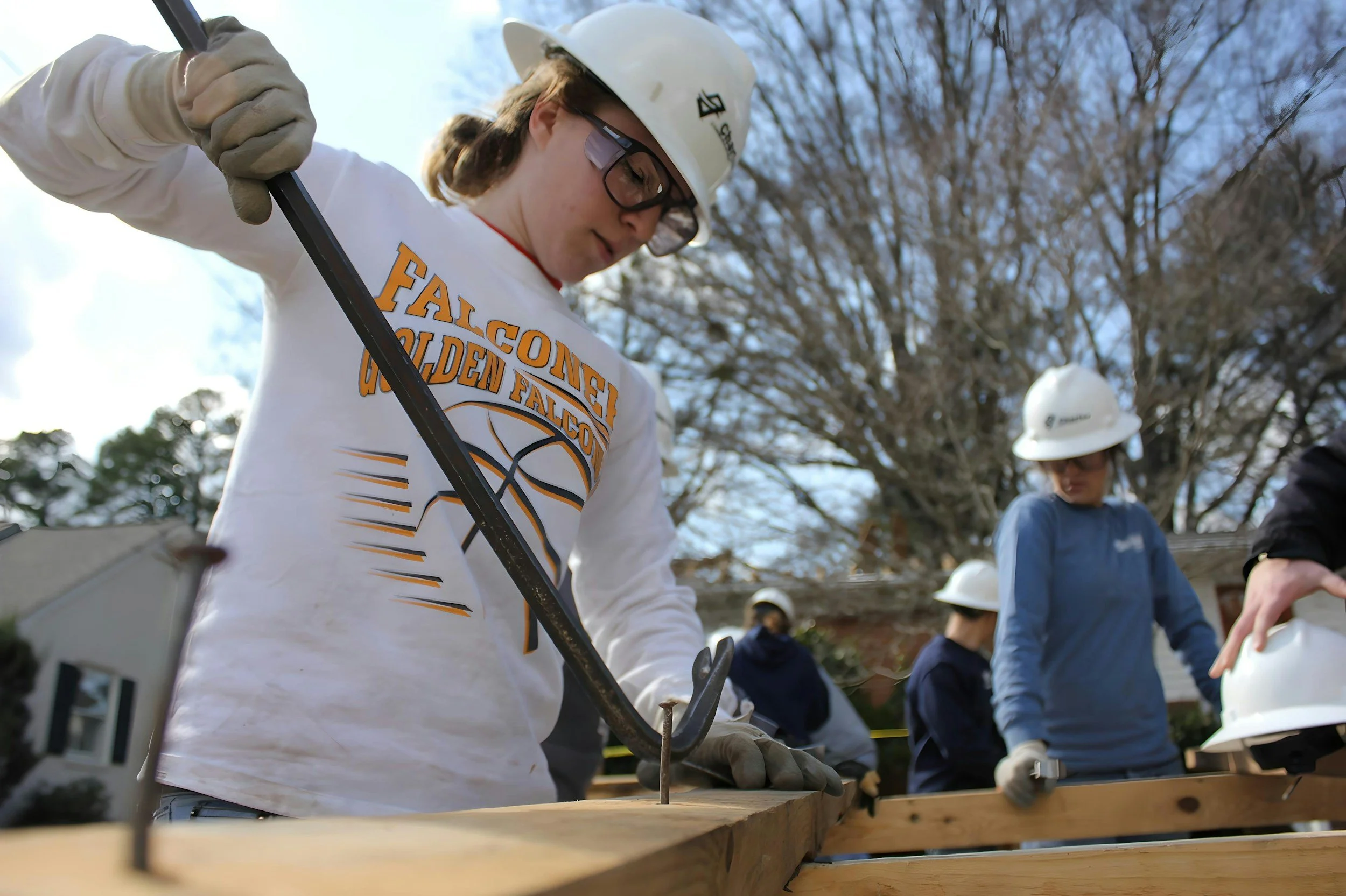
Young woman working on a construction site.
Why Bridge Builders Is Different
Bridge Builders was created because we saw a need for something different, because we understand that contractors do not just need labor…they need workforce.
Traditional staffing often focuses on filling a position. Bridge Builders focuses on preparing people for success. Our approach includes:
Construction skills development
Professional readiness
Safety awareness
Accountability
Mentorship
Career development
We believe a successful employee needs more than the ability to complete a task. They need to understand how to contribute to a project, they need to understand expectations, and they need the confidence and professionalism required to succeed in the construction environment.
Recently, Bridge Builders supported a contractor working to recover schedule on a major federal project. Instead of simply providing additional workers, we provided a complete project support team that included quality control, safety, supervision, operators, and labor support. The contractor immediately recognized the difference. They saw people who were prepared, professional, and capable of adding value. Several members of that team ultimately received offers because the contractor saw their potential and wanted to continue investing in them.
To us, that represents success. Workforce development is not about creating dependency, it is about creating opportunity. When people grow, companies grow. When companies grow, communities grow.
The Future of Construction Requires a Different Approach
The construction labor shortage will not be solved by simply finding more people, it will be solved by investing in people. Contractors must be willing to engage in workforce development. Communities must create stronger pathways into skilled careers. Individuals must be willing to learn, grow, and take ownership of their future.
The opportunity is there, the need is there, the next generation of construction professionals is out there. Our responsibility is to connect the two. Because the future of construction will not be built by finding more workers. It will be built by developing more leaders.
From the Field
After more than two decades in construction, I have learned that the greatest asset on any project is not equipment, technology, or materials.
It is people.
Projects succeed because someone shows up, takes ownership, solves problems, and cares about the outcome. The contractors who understand that will be the ones who thrive in the future. The workforce challenges we face today are real, but I believe the opportunity is even greater. There are willing individuals waiting for someone to believe in them, and there are contractors waiting for the right people to help them grow.
Bridge Builders exists to connect those two realities. Because when we build people, they build the world we live in.